

vellavu
Scooby
- Joined
- Oct 17, 2015
- Messages
- 3,114
Cave glow-worms vomit long sticky urine threads to catch prey
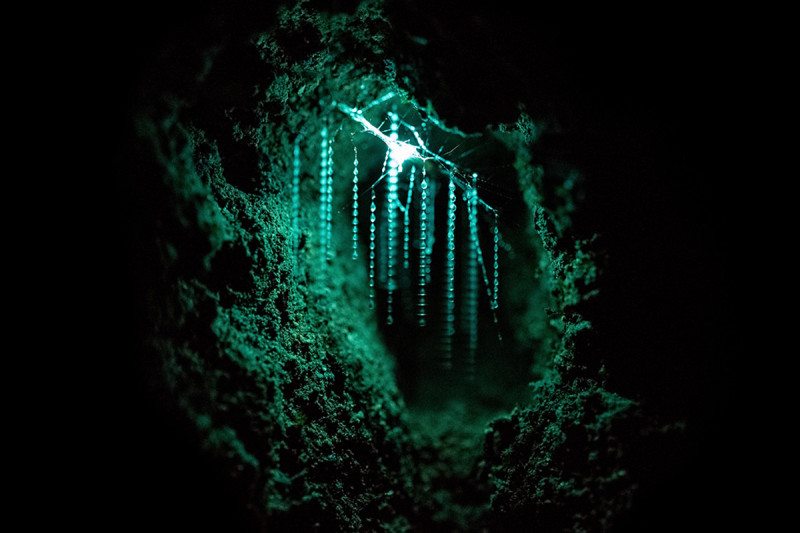
Species: New Zealand glow-worm (Arachnocampa luminosa)
Habitat: Damp caves in New Zealand
Water and wee. That’s what New Zealand glow-worms use to build sticky traps to ensnare their prey.
Arachnocampa luminosa lives in wet caves, spending about nine months as a larva, before growing wings and turning into a fungus gnat that survives for just a few days, during which time it mates.
In the larval form, the glow-worm builds a mucous tube up to 40 centimetres long along the cave ceiling. It then shuttles back and forth along the tube, spewing dozens of long silk threads from its mouth that it leaves dangling from the tube.
Each thread is up to half a metre long and beaded with sticky, mucous-like droplets. These droplets trap flying insects attracted to the blue-green light emitted by the tail of the larva.
Once the insect is stuck, the larva uses its mouth to haul up the fishing line and swallow the prey.
Species: New Zealand glow-worm (Arachnocampa luminosa)
Habitat: Damp caves in New Zealand
Water and wee. That’s what New Zealand glow-worms use to build sticky traps to ensnare their prey.
Arachnocampa luminosa lives in wet caves, spending about nine months as a larva, before growing wings and turning into a fungus gnat that survives for just a few days, during which time it mates.
In the larval form, the glow-worm builds a mucous tube up to 40 centimetres long along the cave ceiling. It then shuttles back and forth along the tube, spewing dozens of long silk threads from its mouth that it leaves dangling from the tube.
Each thread is up to half a metre long and beaded with sticky, mucous-like droplets. These droplets trap flying insects attracted to the blue-green light emitted by the tail of the larva.
Once the insect is stuck, the larva uses its mouth to haul up the fishing line and swallow the prey.


