Territories and Citizens’ Rights

Cohen

Hellhound
Joined
Oct 24, 2005
Messages
4,295
Location
Neptune, California
Sineya

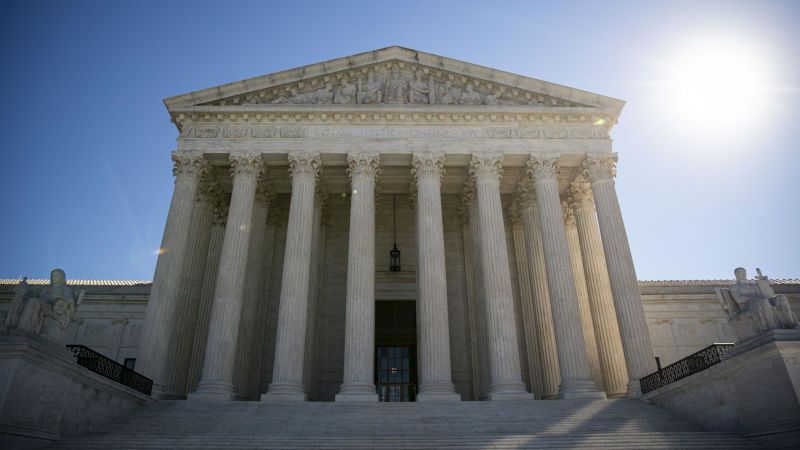
So.. this decision by the US Supreme Court had me thinking about other countries and how rights work in their territories. To me, all citizens, no matter where located, should be afforded the same rights. Whether it’s economic, healthcare, disability, social… everyone get equal rights. Clearly this is not always so. In this particular case, moving from a U.S. state to a territory is what cost a man his Supplemental Income benefits for social security. Regardless that both places are owned by the United States, and governed by the United States, and citizens are by law required to pay taxes, including social security, in the location they reside. And this isn’t a matter off state laws, these are federal laws and regulations. Now, I already disagree that Congress does not have representation for residents of US territories. I can understand the Senate, which has a strict 2 representatives per state rule, but the objective of the House of Representatives is to provide representation for all citizens. In fact, one of the fundamental issues of the American Revolution was “Taxation without representation,” so the fact that we copy this mantra in our own government, after overthrowing another government due in part to this issue, is baffling to me. So how does this work in other countries? Are citizens in territories afforded the same or different rights?
 
Ideally, yes, I agree with you. However, though nobody will call Puerto Rico what it is to the US, a colony. Many would decry this as an overstatement or will strongly oppose my next statement: America sees its held territories as intrinsically lesser, greatly due to (get ready to be triggered) racism. I don't think most Americans realize that Puerto Rico is not its own nation and is instead a colonial holding that is never accounted for. Living here and working in education, I can't even tell you whether or not members of my school board are aware of that fact, let alone be able to broach appropriate discussions of it.
Post automatically merged:

@thrasherpix oh yeah, the classic "national socialism" take. Easily countered with the fact Hitler himself said they should not be confused with the "Marxian socialists," and the fact that they associated communism with Jews. But that's another topic.

Americans are terrified f the word racism and are afraid to acknowledge it. So a lot of our policies are built around it, even if not intentional. To say as much is treated as being overdramatic. America is too afraid of its own shadow honestly, so afraid that education is about masking it rather than addressing it.
 
Last edited:
T
thrasherpix
I heard of a teacher who thought Hitler was a Communist...and met enough idiot teachers to believe it. School board members typically have an agenda that is rarely helpful to the school (at least how many think of its purpose), save incidentally.
It is the government’s responsibility to either accept “colonies” like Puerto Rico as citizens and grant them the rights of every citizen or to cut them loose and allow them to become a sovereign nation.

If the argument is “well they don’t live here so they shouldn’t have a say in things”, then why does Alaska, a state located an entire country away, get official state and citizenry status? 🤔
 
One of the more interesting things I read was a biography of Sonny Barger, the leader of Hells Angels for a while. While he was in prison, he was recognized as a talented artist, so when it came time for someone to make something as a trophy for all the governors of the US, he was directed to make 55 of them. It turns out here are 55 governors, one for each state plus ones for DC, Guam, Puerto Rico, Western Samoa and the Virgin Islands. In some political discussions, these governors have the same voting power as the state governors, so every once in a while, they become important.

Granting the colonies state status would immediately be a drain on the coffers since federal transfer payments to states for various programs would have to include these heavily populated colonies. Yup, Puerto Rico would get payments for interstate highways. Just think about that for a minute. Alaska was valuable for oil and minerals. Hawaii was valuable for tourist trade and as a naval base. Americans can get what they want in other colonies without it becoming a state, so why would the rest of the US vote for their statehood which would immediately grant citizen status and allow transfer of funds out of the existing US?
 
Cohen
Cohen
They already have citizen status without all of the rights and privileges. Though I see you’re point on federal funds for statehood.
To me, all citizens, no matter where located, should be afforded the same rights. Whether it’s economic, healthcare, disability, social… everyone get equal rights.
Not sure how I feel about this decision, especially since Puerto Ricans do pay FICA taxes, from which (I think) SSI is drawn. However, Puerto Ricans do not pay federal income taxes, among others. So there is an argument to be made about equal responsibility, too, I think.

Now, I already disagree that Congress does not have representation for residents of US territories. I can understand the Senate, which has a strict 2 representatives per state rule, but the objective of the House of Representatives is to provide representation for all citizens. In fact, one of the fundamental issues of the American Revolution was “Taxation without representation,”
Puerto Rico does have a non-voting member in the House, who can advise other House members.

It is the government’s responsibility to either accept “colonies” like Puerto Rico as citizens and grant them the rights of every citizen or to cut them loose and allow them to become a sovereign nation.
It is partly Puerto Rico's choice to remain a territory. They have had several plebiscites since 1967, where they voted to remain a territory, instead of becoming a state, or wholly independent. However, in 2017, they voted overwhelmingly to become a state, but an act of Congress is necessary to create a new state, and they have chosen not to act so far. I'm not sure if the US could grant Puerto Rico independence against their will.
 
It is partly Puerto Rico's choice to remain a territory. They have had several plebiscites since 1967, where they voted to remain a territory, instead of becoming a state, or wholly independent. However, in 2017, they voted overwhelmingly to become a state, but an act of Congress is necessary to create a new state, and they have chosen not to act so far. I'm not sure if the US could grant Puerto Rico independence against their will.
Puerto Rico has voted 3 times in 10 years to become a state. It’s time to give them that wish. The fact that they have an “advisor” and not an actual voting member of Congress still means “taxation without representation” in my eyes. I am always pro-citizens in any way. All citizens should have equal rights and privileges under the law, if that’s what is guaranteed by the Constitution.
 
Stake fodder
Stake fodder
I actually completely agree; I was just trying to stay apolitical in my post!
The people in American Samoa have it even worse. They serve in the US military at a higher percentage than anybody else, but they're not even US citizens.

DC, Puerto Rico, the US Virgin Islands, American Samoa, Guam, and the Northern Mariana Islands should all be states. It would be a huge political shake-up and it would give a lot of power to the people in those places, but that's just fine with me.
 
Cohen
Cohen
Agreed!
Sounds like the people of www.cnn.com are also disabled (mentally disabled that is) as in The United States of America there are 48 states, Alaska being above the United States plus the island of Hawaii.
 
I was reading up more about this case today. Some of the justices' opinions seemed to indicate further avenues for pursuing the issue of territorial rights. For instance, Justice Gorsuch indicated that he might have dissented if the case had called into question the "Insular Cases," rulings made in 1901 that established differing treatment of Puerto Rico and Guam. "Because no party asks us to overrule the Insular Cases to resolve today’s dispute, I join the Court’s opinion."

So I think we might not have seen the last of this. Also, the Court indicated that there is nothing stopping Congress from passing a law to alter what federal programs territorial citizens are entitled to. So once again, it comes back to Congress!
 
So I think we might not have seen the last of this. Also, the Court indicated that there is nothing stopping Congress from passing a law to alter what federal programs territorial citizens are entitled to. So once again, it comes back to Congress!
The problem with Congress is if it doesn’t affect enough people, or if enough “voter perception” isn’t behind something, it will never pass. Neither party is “for the people”. This is quite clear when Congress can’t even pass good healthcare legislation. Both parties are for 2 things: re-election and perception of power. If they actually cared about citizens in these territories, they would do what is Right and Just by giving these benefits to citizens who reside in these territories. The fact that all they have to do is hop a plane to any of the 50 states and reside there to get these benefits is what is so abhorrent. It’s only about location, and that’s what makes it unjust.
 
Back
Top Bottom