

Skanky Vamp
Sniffin' the Slayer
- Joined
- Aug 12, 2008
- Messages
- 26,460
Next time you bite into a slice of watermelon or a cob of corn, consider this: These familiar fruits and veggies didn't always look and taste this way.
Genetically modified foods, or GMOs, inspire strong reactions nowadays, but humans have been tweaking the genetics of our favorite produce for millennia.
While GMOs may involve splicing genes from other organisms (such as bacteria) to give plants desired traits — like resistance to pests, selective breeding is a slower process whereby farmers select and grow crops with those traits over time.
From bananas to eggplant, here are some of the foods that looked totally different before humans first started growing them for food.
Wild watermelon
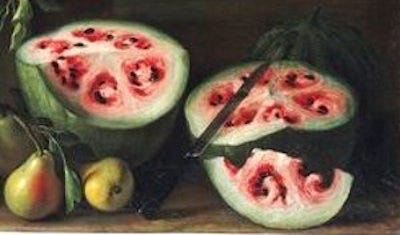
This 17th-century painting by Giovanni Stanchi depicts a watermelon that looks strikingly different from modern melons, as Vox points out. A cross-section of the one in the painting, which was made between 1645 and 1672, appears to have swirly shapes embedded in six triangular pie-shaped pieces.
Wild banana
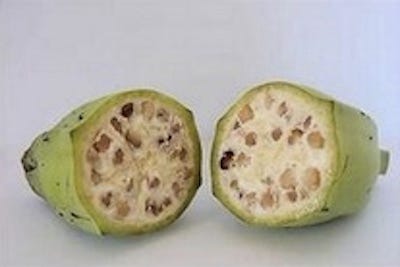
The first bananas may have been cultivated at least 7,000 years ago — and possibly as early as 10,000 years ago — in what is now Papua New Guinea. They were also grown in Southeast Asia. Modern bananas came from two wild varieties, Musa acuminata and Musa balbisiana, which had large, hard seeds, like the ones in this photo.
Wild eggplant
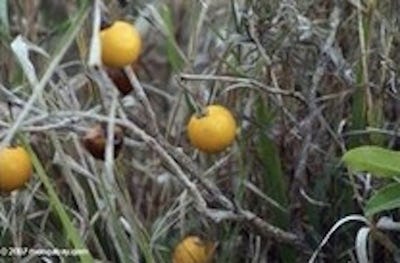
Throughout their history, eggplants have come in a wide array of shapes and colors, such as white, azure, purple, and yellow — like those shown here. Some of the earliest eggplants were cultivated in China. Primitive versions used to have spines on the place where the plant's stem connects to the flowers.
Wild carrot
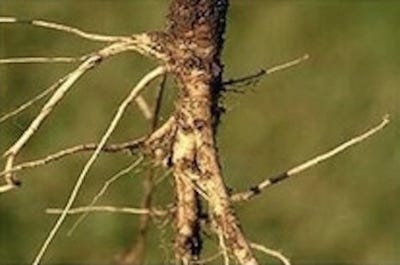
The earliest known carrots were grown in the 10th century in Persia and Asia Minor. These were thought to originally be purple or white with a thin, forked root — like those shown here — but they lost their purple pigment and became a yellow color.
Wild corn
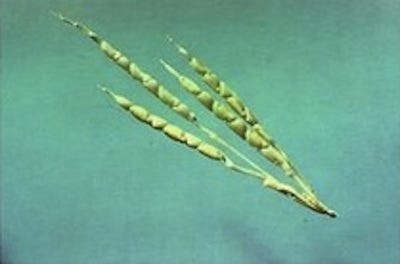
Perhaps the most iconic example of selective breeding is North American sweetcorn, which was bred from the barely edible teosinte plant. Natural corn, shown here, was first domesticated in 7,000 BC and was dry like a raw potato.
Genetically modified foods, or GMOs, inspire strong reactions nowadays, but humans have been tweaking the genetics of our favorite produce for millennia.
While GMOs may involve splicing genes from other organisms (such as bacteria) to give plants desired traits — like resistance to pests, selective breeding is a slower process whereby farmers select and grow crops with those traits over time.
From bananas to eggplant, here are some of the foods that looked totally different before humans first started growing them for food.
Wild watermelon
This 17th-century painting by Giovanni Stanchi depicts a watermelon that looks strikingly different from modern melons, as Vox points out. A cross-section of the one in the painting, which was made between 1645 and 1672, appears to have swirly shapes embedded in six triangular pie-shaped pieces.
Wild banana
The first bananas may have been cultivated at least 7,000 years ago — and possibly as early as 10,000 years ago — in what is now Papua New Guinea. They were also grown in Southeast Asia. Modern bananas came from two wild varieties, Musa acuminata and Musa balbisiana, which had large, hard seeds, like the ones in this photo.
Wild eggplant
Throughout their history, eggplants have come in a wide array of shapes and colors, such as white, azure, purple, and yellow — like those shown here. Some of the earliest eggplants were cultivated in China. Primitive versions used to have spines on the place where the plant's stem connects to the flowers.
Wild carrot
The earliest known carrots were grown in the 10th century in Persia and Asia Minor. These were thought to originally be purple or white with a thin, forked root — like those shown here — but they lost their purple pigment and became a yellow color.
Wild corn
Perhaps the most iconic example of selective breeding is North American sweetcorn, which was bred from the barely edible teosinte plant. Natural corn, shown here, was first domesticated in 7,000 BC and was dry like a raw potato.


