Some of my own postings about what is needed next (with some debate from Gallifrey Base):
===
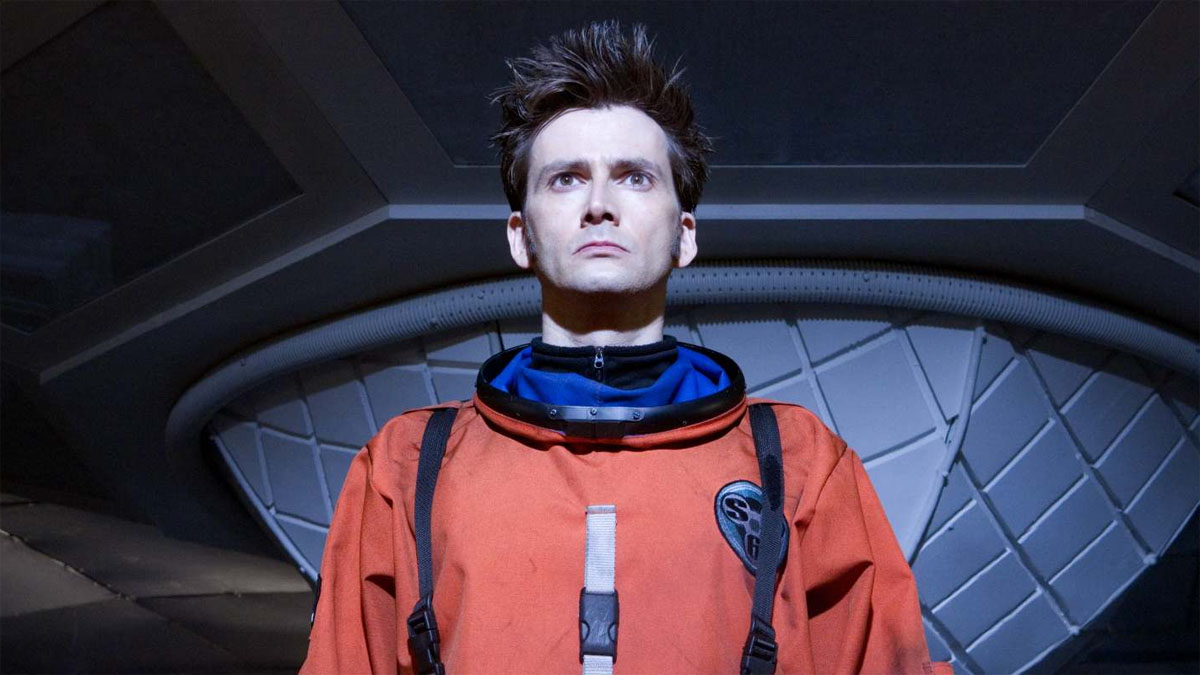
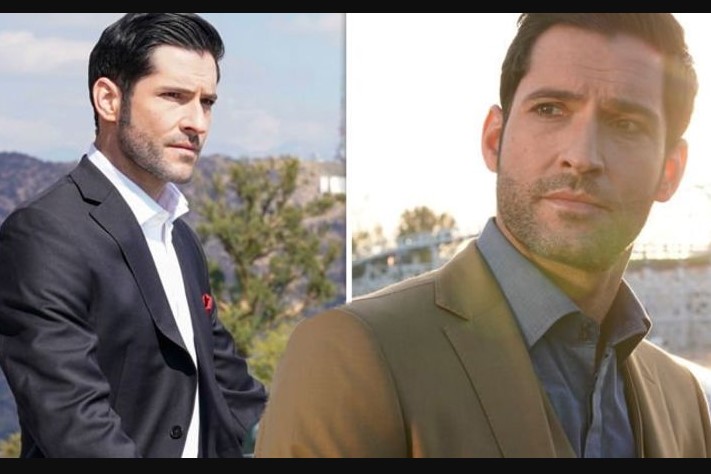
Still pulling for Tom Ellis (Lucifer has finished filming) or Michael Sheen.
Both have actually been in DW and have extremely positive good will amongst the right fans (including all the lapsed female ones that were driven away in droves) the show desperately needs to get back. Ellis, in particular, could bring the show back up to the popularity of Tennant and Smith.
===
If you actually want the audience back that is still crying out for Tennant and Smith, you're going to have to cast someone who actually appeals to the fans (especially female) that were driven off in droves. These would be good will picks that would signal those lost fans that the show is serious about wanting them back by casting someone they probably already love.
Tom Ellis (if you really want must-see TV the scale of Tennant) or Michael Sheen would be that sort of signal.
===
Have you just seen Miranda/his brief appearance as Martha's ex or have you actually seen Lucifer? Because the last thing Tom Ellis is is dull. He's incredibly larger than life and charismatic. I don't think anyone who has watched Lucifer would ever describe that performance as "dull". Lucifer is also now over. Gravitas and pathos are also in his wheelhouse, not just comedy and flamboyance. There's also the potential to make the Doctor more of a larger-than-life man of action or romantic lead again.
Michael Sheen is also charismatic and would also appeal to the fans who are also screaming out for a more middle-aged performer, while also appealing to even younger females who fell in love with him in Good Omens who weren't necessarily familiar with his long career before that. It was also a performance with a lot of endearing warmth (from an actor known for edgier fare) that the Doctor needs to signal that good will, while at the same time promising some real potential for gravitas and pathos.
===
How about we just focus on making Doctor Who popular again? And you're going to need women back.
I know it's difficult to accept here and amongst those in denial that the show is in real trouble after the last two incarnations not remotely setting the world on fire.
The BBC and Gallifrey Base both might have to suck up the fact that in order to get women back (the women who weren't easily flattered by a female Doctor or political posturing--indeed, it actually broke the fantasy for a lot of us who dreamed less of being a CBeebies presenter in space and more of being whisked away from our boring lives by a larger-than-life, handsome hero), they're going to have to cast someone more like David Tennant and Matt Smith again.
The show is on its last legs, so might as well try a hail Mary to bring back the lapsed fangirls, which absolutely flooded into the fandom during the RTD and early Moffat years. It's no mistake that RTD had Buffy the Vampire Slayer/Angel: the Series in mind as inspirations on how to make Doctor Who appealing to this new generation of genre fiction-savvy female fans (and he could actually relate to liking the things we were fond of). Doctor Who used to be part of our major multifandom loves, but has dropped off the map entirely now into irrelevance.
Even back during the origins of the show, they understood they needed an Ian Chesterton to balance out the grandfatherly lead, until the Doctor himself soon became the Ian Chesterton type and a swashbuckling hero (there were even subtle romantic elements in Classic Who) in his own right.
===
I've seen an awful lot of comments comparing the current incarnation to being a Tennant/Smith ripoff, but I think that's an incredible misunderstanding of RTD or Moffat's takes on the character. I think Jodie guessed at what those incarnations were like from the most vapid descriptions and working with Tennant in Broadchurch, but having no real idea of what their Doctors were actually like. She has an incomplete understanding from having never watched the show, even of the eras she knows are popular and what she's heard about them (falsely).
Den of Geek recently published an article on this very subject, but confused the audience not remembering what RTD/Tennant's portrayal was (Ten fans absolutely *do* remember) with what I rather think is the current makers of the show and the media not remembering.
The meatier elements contributed a lot more to what made the incarnation popular than they give it credit for and those are wholly absent from the surface-level copycat. Not only that, RTD was quite cynical about happy endings and preferred bittersweet tragedies (Moffat was largely the opposite). And very unlike the current writing, RTD hung lampshades on when the Doctor was falling from grace or making a gray decision. It was never swept under the rug and ignored. It was faced head on as the part of the narrative that most resembles the long-form storytelling still in vogue today. That *was* the real story that was building.
The new incarnation didn't merely steal RTD's format, it actually regressed it by stripping out all of the interpersonal ongoing dramatic narratives and acknowledgment of character flaws.
Part of the increasing emphasis on long-form storytelling (something that did begin in '90s American television!) in the age of streaming to the point of fewer standalone Monster of the Week episodes (which is a format old as dirt, though The X-Files and Buffy the Vampire Slayer gave it its modern form alongside an overarching mystery or seasonal Big Bads), or seemingly episodic adventures that still contribute to the overall arc (RTD seeding in Bad Wolf, Torchwood, Vote Saxon, planets disappearing and knock four times, while building on individual character arcs vs. Moffat's building of a timey-whimey mystery), is having ongoing story elements that are percolating in the background of every adventure. Even the most innocuous MotW will have major character moments building up a multi-season character journey and an unfolding arc/mystery in the background.
In the age of streaming, while there are fewer MotWs (though certainly not in shows like Supernatural, which kept its retro old WB format going all the way through last year!), the emphasis on character development and multi-episode/season long-form arcs has actually grown, not regressed. Doctor Who has gone *backwards* in this regard since Moffat left. The consequences of the last episode need to matter in the next.
The comments section is even more revealing than the article.
===
David Tennant's Doctor rivals even the great Tom Baker for popularity. Ten's reputation for fun and enthusiasm though, doesn't tell the whole story about this well-written, well-acted character.

www.denofgeek.com
(My post from Den of Geek.)
Ten fans LOVE Time Lord Victorious and his tragic hero's journey.
It had significant setup with the Time War (believing he'd had no choice but to genocide his own race and that he was the last Time Lord), his flighty reaction towards facing his own immortality amongst companions with the lives of mayflies, his reaction to losing Rose and then how it affected his treatment of Martha and Donna. He was the Doctor who seemed most human on the surface and the incarnation most tempted by humanity, yet often fled to the other extreme by becoming his most alien self in response to loss.
The fatalistic streak was seeded into his incarnation in episodes like The Runaway Bride, which ends with a genocide and near suicide. He swings wildly from being one of the most seemingly happy, human Doctors, to being the darkest and most alien. Human Nature/The Family of Blood was more fallout from him being unwilling to tell Rose before it was too late, then only admitting it after he'd lost her and using it to push away others, and a story where he faces the temptation of humanity only for it to bring out his most alien, darkest side. It was yet another one of these stories that led to him breaking the laws of time in The Waters of Mars.
Ten as the epic, romantic, tragic Doctor is one of the reasons we love him so much. It's the very thing that separates him from most incarnations.
Den of Geek has apparently never asked any.
What the current incarnation is getting so wrong about trying to copy Tennant's portrayal to other Doctors is that *they* forget that he wasn't just a happy, funny incarnation. They're missing those key ingredients of epic, angsty tragedy; of the temptation of love and inevitable loss. His journey is of a fall. He was compared to an angel, only to turn out to be a fallen one. It was the incarnation's very humanity, like Icarus flying too close to the sun, that exposed how much the Doctor can't be human and made him feel the most alien of all. It's the storyline that dared to tempt the Doctor with what he most wants, yet can never have.
Russell T Davies was inspired by Buffy the Vampire Slayer/Angel when he brought back the show. The character that the Doctor most resembles is Angel. It's the tragedy of the immortal who loses everyone they've ever loved. It's the outsider who can build himself a family of fellow misfits and pretend to be human, but can never truly fit in and is always the one left out looking in on a life they can never have. If he dares to forget that he's not human and get too close, that humanity is ripped right from under him (quite literally Angel's curse). They are also both characters capable of the most amazingly heroic, sacrificial and selfless things, yet also some of the most morally gray, teetering on the edge of villainous and deeply tragic. The road to hell is paved with good intentions. They're characters often forced to do terrible things not because they want to, but because there's no other choice. RTD's writing never shied away from the flaws and tragedy of the inspiration.
===
(Some of this was a debate with burrunjor.)
Sorry to tell you this, but I just watched all 11 seasons not long ago. It took Scully 8 seasons before she remotely ever took on the believer role at the cost of looking daft in about half of the stories where that continuous denial and skepticism was starting to look less than scientific. Becoming a true believer began only after Mulder left and got replaced by newcomer Doggett.
Scully would very much still be in denial after the Autons. LOL. She saw far crazier crap than that without changing her outlook.
While it was rather disastrous for the show to lose Mulder (whose backstory and life mission was tied to the alien conspiracy plot bubbling under the whole show--spoilers, but the Cigarette Smoking Man is his biological father!), it did at least give Scully a greater chance of being right about cases that were majority paranormal when it was Doggett instead being the skeptical one. The few times prior that she got a chance to be right were when her religious beliefs (her Catholicism was the one little contradiction in her otherwise scientific approach) made her the believer and Mulder the skeptic.
The lopsided scorecard was a hazard of being the one tasked with looking for scientific explanations in a paranormal/sci-fi show, even if she could contribute expertise mostly from the forensic table. Mulder is the one who had the encyclopedia of paranormal phenomena in his head and tended to do a lot of rescuing. It was actually getting on my nerves how often Mulder rescued Scully, even if she finally got some chances to fight back (bathtub creep Donnie Pfaster comes to mind).
Mulder wasn't too far from the portrayal of the Third Doctor, minus the respect due to those in authority and coworkers thinking "Spooky Mulder" was insane and not in a respected way. Mulder was also a wannabe Indiana Jones-meets-John Book (Witness--Mulder even references it) with all of his breaking and entering, riding on top of a train and skyride, etc..., so the action man role wasn't out of his wheelhouse either. Absolutely an outsider trying to work barely within the confines of the law and authority.
The Doctor has a lot of similarities with many male leads from American television.
If you read my quoted post, you'll see a long list of comparisons to Angel (and in return, that character owes much to Connor/Duncan MacLeod of Highlander before him with the Curse of Immortality trope). RTD definitely used Angel, Buffy and Spike in his portrayals of the Time War-era Doctor, Rose, Jack and John (can't get any more obvious with the actor), respectively. It's full-on homaged in School Reunion. The Tenth Doctor even starts to sound like Angel and the Mayor giving his "wither and die" speech. The larger-than-life inhuman action hero aspect is definitely there, given Angel pretty much became Batman-meets-Captain America, along with the whole story ending on a very bittersweet, tragic note.
Rose was likewise a huge shout-out to Buffy, complete with her origins as an oft-disrespected character type (the ditzy, blonde, Valley Girl schoolgirl cheerleader-turned-superhero and the council estate shopgirl-turned-Bad Wolf) who turns out to be extraordinary. And indeed, both in love with mysterious, guilt-stricken strangers for whom their love is impossible, forbidden and will end in tears. Jo Grant also comes to mind as having a very similar setup as a character who nobody initially respects turning out to be very brave, indeed (arguably the first to express less-than-platonic feelings for the Doctor in The Green Death). Chloe Decker from Lucifer was given a similar backstory as a former actress in an embarrassing film and a case that made her a pariah at the LAPD trying to prove herself.
Angel (ditto Lucifer now having an extremely similar setup and even Forever Knight before that--the shows are massively similar!) also was a non-human with superpowers who had to work as a supernatural detective with the LAPD and evil lawyers breathing down his neck, despite not being human and having no legal identity. These are all characters surrounded by a lot of close human friends, but can never truly fit in amongst them. They are characters who are explicitly denied a part in the mortal coil and will lose everyone they've ever loved.
Many immortals, by virtue of being less than human, have a lot of angst about not being able to have children (the Doctor is skittish about romance, in spite of beginning his story as a grandfather) and a part of them wanting that; which is why they all keep having their own variations on Human Nature going back to Superman II. Angel, Clark Kent (both Christopher Reeve and Tom Welling), Castiel (whose story is very like The Little Mermaid--the tragic version), the Doctor, etc... all have Human Nature-esque episodes.
Avenging/fallen angel imagery is also popping up excessively lately and not just because of the current deluge of literal, non-metaphoric angels and demons in media right now. Angel (let's start with the name) and the Tenth Doctor have it applied to them right in dialog.
The MacLeods and Angel have the Prize and the Shanshu Prophecy promising them a Pinocchio ending (becoming "real boys") that they likely will never win. Beauty and the Beast, The Little Mermaid, Pinocchio and Peter Pan are fairy tales these larger-than-life characters all have elements of. The Doctor is very Peter Pan, made most explicit by the imagery of Amelia Pond and all the girls he keeps stealing away to far-off lands, yet it often ends with the girls wanting something he can never give them.
And then there's the fact that the most popular sub-genre in genre fiction right now is the superhero. The Doctor has been flirting with being a superhero for about half a century, but became so even more blatantly with RTD.
When you come up with a new Doctor and companion, you better as hell know what archetypes and tropes are still quite popular and relevant in the genre. Certain things are absolutely time-tested. Know the audience whom you want watching your show again. Cast accordingly with people who really understand the archetypes and tropes they're about to play.